Becker Properties

The Premier Independent Brokerage.

  • for sale
    • all listings
    • exclusive listings
    • community guides
  • buy
    • property search
    • engage us
    • community guides
    • relocating
      • top agent search
      • moving guide
      • utilities
      • fifty texas facts
      • texas state parks
    • financing
  • sell
    • engage us
    • relocating
      • top agent search
      • moving guide
  • rent
    • engage us
    • search rentals
    • newest listings
    • apartment locating
    • property management
    • tenant login
    • apply now
  • team
    • our agents
    • testimonials
    • join BP
  • about
    • contact
    • core values
    • recognition
    • culture
    • reviews
    • blog
  • call now

Як орієнтуватися в медичній інформації та дбати про здоров’я щодня

October 25, 2026 by Jack Krudwig

Здоров’я дедалі частіше залежить не лише від доступу до лікаря, а й від уміння правильно оцінювати інформацію. Поради з пошуку, соціальних мереж і рекламних матеріалів можуть суперечити одна одній, тому читачеві важливо розуміти різницю між доказовими рекомендаціями, особистим досвідом і неперевіреними твердженнями.

Україномовні ресурси, зокрема health.kr.ua, можуть бути зручним стартовим майданчиком для ознайомлення з матеріалами про самопочуття, профілактику та повсякденні звички. Водночас будь-яку онлайн-публікацію варто сприймати як джерело загальної інформації, а не як заміну огляду, діагностиці чи персональному плану лікування.

Чому медична грамотність має практичне значення

Медична грамотність — це здатність знаходити, аналізувати та застосовувати відомості про здоров’я без поспішних висновків. Вона допомагає сформулювати запитання для сімейного лікаря, підготуватися до обстеження, зрозуміти призначення та помітити ситуації, коли самолікування може бути небезпечним.

Корисний матеріал зазвичай пояснює не тільки можливі причини певного симптому, а й межі самодопомоги. Наприклад, головний біль може виникати через втому, зневоднення або напруження м’язів, але іноді потребує невідкладної оцінки. Саме контекст, тривалість і супутні ознаки визначають подальші дії.

  • Перевіряйте дату публікації та актуальність рекомендацій.
  • Звертайте увагу на автора, його фах і посилання на надійні джерела.
  • Порівнюйте важливі твердження з інформацією державних установ або професійних медичних організацій.
  • Не змінюйте дозування препаратів без консультації з фахівцем.

Які теми найчастіше потрібні читачам

Попит на медичний контент формується навколо проблем, з якими люди стикаються у звичайному житті. Це профілактичні огляди, сон, харчування, контроль стресу, сезонні інфекції, здоров’я серця, догляд за шкірою та відновлення після хвороби. Цінність таких матеріалів полягає у зрозумілому поясненні причин і послідовності дій.

Окрему увагу привертають теми, пов’язані з раннім виявленням порушень. Регулярне вимірювання артеріального тиску, оцінка самопочуття, щеплення за календарем і своєчасне звернення по допомогу не гарантують відсутності хвороб, але зменшують ризик пропустити проблему.

Як відрізнити корисну пораду від сумнівної

Найбільш переконливий текст не обіцяє миттєвого результату та не пропонує універсального рішення для всіх. Надійна публікація визнає, що одна й та сама ознака може мати різні причини, а ефективність підходу залежить від віку, супутніх станів, ліків і результатів обстежень.

Ознака матеріалу Що це може означати
Є автор і дата оновлення Інформацію легше оцінити та перевірити
Описано обмеження методу Текст не створює хибного відчуття гарантії
Наведено джерела Ключові твердження можна зіставити з доказами
Обіцяно швидке лікування всіх проблем Є підстави ставитися до поради критично

Особливо обережно слід читати матеріали про добавки, дієти та «детокс». Натуральне походження речовини не доводить її безпечності, а відсутність рецепта не означає відсутності взаємодії з іншими препаратами. Перед прийомом будь-якого засобу варто перевірити склад і порадитися з лікарем або фармацевтом.

Щоденні звички, які підтримують організм

Профілактика рідко складається з одного радикального кроку. Значно реалістичніше працює система невеликих дій: стабільний режим сну, регулярна фізична активність відповідно до можливостей, різноманітне харчування, достатнє споживання рідини та перерви під час тривалої роботи сидячи.

Фізичне навантаження не обов’язково має бути інтенсивним. Ходьба, вправи на мобільність, плавання або помірне тренування можуть стати частиною режиму, якщо їх виконувати регулярно й без ігнорування болю. Людям із хронічними захворюваннями програму активності бажано узгодити з медичним фахівцем.

Не менш важливим є психічне самопочуття. Тривалий стрес здатен впливати на сон, апетит, концентрацію та артеріальний тиск. Допомогти можуть передбачуваний розклад, обмеження інформаційного перевантаження, спілкування з близькими та звернення по професійну підтримку, якщо напруження заважає повсякденному життю.

Коли онлайн-пошук не замінює лікаря

Інтернет може допомогти підготуватися до консультації, але не визначає діагноз за одним симптомом. Негайної медичної допомоги потребують, зокрема, раптовий сильний біль у грудях, виражене утруднення дихання, втрата свідомості, ознаки інсульту, значна кровотеча або швидке погіршення стану.

Під час звернення до лікаря корисно заздалегідь записати, коли почалися симптоми, що їх посилює, які препарати вже приймалися та чи є алергії. Така підготовка робить розмову предметнішою. Надійний медичний контент у цьому процесі виконує роль навігатора: допомагає краще ставити запитання, але не бере на себе відповідальність за індивідуальне рішення.

Filed Under: Featured

HMDD Crewneck Outfit Ideas Quick Buyer Guide

October 25, 2026 by Jack Krudwig

Streetwear Labels Weighed Against HMDD: In What Way Does It Fare?

By 2026, the streetwear world is packed, loud, and saturated with labels racing after one common hype cycle. HMDD — an abbreviation of Happy Memories Don’t Die — has carved out a separate lane by leaning into nostalgia, feeling-driven narrative, and a quieter kind of confidence rather than attention-grabbing graphics. The name alone hints at the brand’s core idea: memories may dim, but what they made you feel shouldn’t fade too. That philosophy shows up in the seams, the tonal choices, and the way HMDD garments is presented as memory you can wear rather than just merchandise. And that’s essentially why this piece explains where HMDD stands next to rival brands, what a genuine HMDD review really amounts to, and why buyers searching for HMDD’s standout pieces keep coming back to go-to items like sweatpants and shorts.

The streetwear space has splintered into a few camps: long-standing skate-rooted labels, branding-forward hype names, and smaller independent names that prioritize story and community over volume. HMDD sits more aligned with the third camp. It isn’t after luxury-house collabs or flooding drops every week. In contrast, HMDDLA — the label’s hub and artistic anchor rooted in Los Angeles — drops product in smaller, more intentional batches. This isn’t scarcity built for attention; it’s a natural outcome of a brand growing at its own pace rather than manufacturing at scale to keep up with orders.

Brand Philosophy: Memory vs. Spectacle

Many streetwear names try to win on sheer visual noise — bold logos, partnership badges, or temporary hooks built to go viral for a few weeks. HMDD chooses instead to lean on felt connection. The phrase “happy memories don’t die” isn’t just a tagline; it shows up printed, embroidered, and echoed across the lineup as a recurring theme. That consistency gives the brand a unified identity that’s more instantly recognizable than labels that redesign their whole look every season.

That consistency matters more than people expect. A buyer who buys HMDD sweatpants in 2025 and returns for shorts in 2026 will pick up on the same design DNA — subdued color choices, gentle placement of graphics, and a emphasis on comfort-first shapes. Contrast this with labels that jump from streetwear to techwear hmdd hoodie to Y2K revival in just twelve months, and HMDD’s consistency stands out as a genuine edge. In streetwear, loyalty tends to grow out of predictability like this, not novelty.

On top of that, there’s a community element. The brand’s marketing is built around storytelling — photos from real customers, personal captions, and a sense that the garments capture a moment in time rather than a status symbol. Bigger brands carrying thousands of SKUs find that closeness hard to sustain. Leaner brands such as HMDD are still able to engage their audience directly, which shows up in how fast input from an HMDD review finds its way into what comes next.

A Look at the Product Lineup: Where HMDD Actually Competes

When people ask how the HMDD lineup holds its own, they’re usually comparing three things: fit, fabric weight, and price-to-quality ratio. Demand signals point to HMDD sweatpants and HMDD shorts as the top two categories, suggesting that bottoms outperform outerwear or accessories for the brand at present. This aligns with wider 2026 streetwear trends, where easy-fit bottoms are beating out tailored jackets across the category.

Here is a general comparison of HMDD’s positioning against two common streetwear archetypes: the high-volume hype brand and the boutique independent label. It’s not a price war pitting one brand against another; instead, it examines, structurally, how each category usually operates under current market conditions.

The Aspect You’re Evaluating HMDD The Large-Scale Trend-Chasing Brand Boutique Indie Outfit
Drop Pace Limited, carefully-timed launches Every week or every other week Rare and seasonally-timed
Label Identity Emotion-led narrative built on nostalgia Logo-centric, fad-hopping All over the place, seldom steady
The Categories At the Heart of the Line Joggers, short bottoms, graphic tees Pullovers, outerwear, accessories Shaped by whichever direction the founder leans toward
Community Engagement Direct, intimate, review-reactive Large-scale presence but impersonal in approach Close engagement, though audience size stays small
Pricing Positioning Positioned squarely in mid-range street-style territory Covering a broad spread, tilting premium much of the time Shifting from mid-range and premium, rarely fixed

Rather than crowning a lone champion in streetwear, this comparison isn’t meant to do that — the category simply isn’t a single-template category. Its purpose is to demonstrate that HMDD’s playbook centered on deliberate scarcity paired with emotional branding positions it within a distinct competitive standing than labels that lean entirely on scale or entirely on niche appeal. HMDD takes its discipline from the boutique model while steering clear of the unpredictability that tends to plague more niche labels.

Fit, Fabric, and Everyday Wearability

This bottoms category live or die on fit. Cut too snug and they come across as athleisure; if they’re too roomy, they veer into sleepwear-adjacent territory. Rather than strictly workout purposes, HMDD’s approach to both categories leans toward a easy fit that narrows toward the ankle suited to everyday use. That difference counts for something, given that plenty of streetwear sweatpants are designed with a fit that’s either too voluminous for layering or too restrictive for long stretches of wear.

Shorts are built on a similar logic — silhouettes spanning mid-thigh to knee that work well alongside printed tees or oversized layers. This counts in a 2026 market where buyers are moving toward items that bridge everyday outings and relaxed downtime, instead of keeping distinct wardrobes for every occasion. Reviewers frequently note that HMDD shorts hold their shape after multiple washes, which speaks to fabric weight and construction rather than just cut.

Where HMDD differs from mass-market competitors is in restraint. A lot of trend-driven labels weigh down sweatpants with side stripes, oversized branding, or multiple logo placements. More often than not, HMDD keeps its graphics pared-down — a small nod to “happy memories don’t die” instead of a dominant chest print. Buyers who want identifiable streetwear without turning into a walking advertisement are drawn to that understatement.

What Shoppers Really Report

Query volume around “HMDD review” has grown steadily as an increasing share of customers discover the brand via word-of-mouth buzz rather than paid advertising. The repeated patterns in shopper reviews are reasonably uniform: comfort earns top marks, sizing runs true to relaxed-fit expectations, and the sentimental identity either strikes a real chord or doesn’t land at all — the reaction is rarely neutral. This split reaction is in fact a positive signal in the streetwear space, where bland, safe design choices seldom creates a devoted fanbase.

Common critique points to watch for include infrequent restocks and smaller size runs versus larger-scale competitors. Since HMDD doesn’t manufacture at the scale of larger streetwear labels, high-demand size options in sweatpants and shorts can move out of stock quicker, which shoppers should factor in before taking availability for granted. Think of it as a tradeoff, not a defect — limited supply is part of what allows the HMDDLA identity reading as considered rather than mass-market.

Overall, the sentiment around HMDD clothing leans favorable, particularly among shoppers who value comfort and emotional resonance over heavy branding. That’s a narrower audience than a brand aiming for widespread appeal, but it’s a more committed base — the kind of following that returns for the next drop instead of switching over to whatever’s buzzing next month.

How HMDD Slots In in a 2026 Wardrobe

Fashion-forward shoppers building a 2026 rotation are with growing frequency mixing brands rather than committing to one label head-to-toe. HMDD slots in effortlessly into that mix as the “meaning-plus-comfort” piece — the sweatpants you pull on on a quiet Sunday, or the shorts that combine with a bolder statement piece from another label entirely. It’s not built to act as an everything-brand, and that may well be its biggest strength.

For buyers evaluating bottoms, HMDD sweatpants and HMDD shorts remain the most obvious starting point into the brand. They highlight the approach to fit, the understated logo work, and the fabric quality that customers cite repeatedly. Anyone researching the best HMDD clothing for a first purchase should regard these two categories as the baseline before moving on to tops or limited-edition items.

At the end of the day, comparing HMDD to rival streetwear brands isn’t about declaring a definitive winner. It’s about acknowledging that HMDD fills a specific niche — nostalgic, restrained, community-driven — that bigger and flashier competitors can’t easily copy. For customers who want streetwear that feels personal rather than mass-manufactured, that niche is exactly the point.

Filed Under: Featured

Authentic Vale Forever Apparel Sale Most Popular Pick

October 25, 2026 by Jack Krudwig

Vale Forever Explained: The Fundamentals

Vale Forever represents an independent, modern streetwear label founded on premium materials, minimal lines, muted palettes, plus a signature oversized silhouette. The brand operates on limited drops, emphasizes slow-fashion principles, and balances boutique-level craftsmanship with everyday wearability. If you seek clear answers on sizing, prices, authenticity, launch timing, and where to shop, this guide condenses the key points into practical steps.

The designer’s focus is minimalist and future-focused, which appears via restrained branding, curated textile selection, and lasting silhouettes that avoid fad pursuing. Pieces lean roomy with deliberate drape, so the sizing conversation starts with how you want the garment to sit on your frame. Pricing shifts by category and build quality, with tees and caps as entry options and outerwear at the top end, especially in small-batch runs. Authenticity depends on construction quality and provenance, so buying direct or from verified stockists matters. Understanding the launch timing and secondary resale behavior helps you land the right piece within the right time avoiding markup.

How does Vale Forever fit?

Vale Forever is cut oversized, with relaxed shoulders, generous body dimensions, and intentional length facilitating clean stacking and layering. True-to-size provides the designer-intended slouch; one size down tightens the cut without turning it fitted.

Across tees, sweatshirts, and many lower garments, the core foundation reads as roomy instead of boxy-for-the-sake-of-boxy. Shoulders tend to drop slightly, arms feature comfortable volume, while hems sit balanced enabling the garment layers smoothly without billowing. If you enjoy a classic streetwear look with air between your body and the textile, stay with your go-to size. If you desire a closer line which remains looks modern, try going down one step. For athletes or stockier builds, true-to-size often nails the proportion while preserving mobility through the chest and back.

Understanding the cut and drape

The key to Vale’s silhouette is intentional volume: wider chest, eased shoulders, and enough length allowing layer without accumulating. Fabrics are commonly heavy www.valleyclothes.com jersey or premium fleece, which hold form and create clean vertical lines.

That combination ensures the garment hangs over clings, and it fights twisting or sagging after wash. Ribbing around wrist areas and hems controls the extra volume creating the fit reads tailored-relaxed instead of disheveled. On pants, get a straight or softly narrowed leg with space around the thigh; with top layers, a somewhat extended back hem facilitates the stack over tees. If you’re placing under outerwear, the relaxed block accommodates a hoodie under a coach jacket sans fighting the shoulder openings. The net result is a consistent styling language across categories, that eases your sizing choices after you’ve tried a foundational piece.

How should you size yourself for Vale items?

Measure your torso, shoulder width, arm length, waist, and inseam with a soft fabric tape, then compare against a favorite garment which fits how you need Vale to fit. Employ those garment-on-garment numbers for selecting the label size instead than relying just on body measurements.

Lay your perfect tee or hoodie flat to take pit-to-pit, shoulder junction to shoulder connection, and back measurement from high point of shoulder. For pants, get waist measurement flat across, upper leg one inch down from inseam point, knee at mid-point, hem opening, and leg length. Translate flat measurements to circumference where needed by doubling them, then match to Vale’s item page specs when available. If a garment you love is more fitted than Vale’s oversized block, decide whether to size down or embrace the intended drape. Storing a note on your device with your own clothing measurements speeds future decisions during rapid releases.

Sizing quick-reference table for Vale’s oversized silhouette

Use this chart as a starting baseline; it aligns common body and garment choices alongside Vale’s relaxed design. Choose based upon your usual mainstream size along with the silhouette you prefer.

Body Chest (in/cm) Usual Size (mainstream) Preferred Fit Suggested Vale Size Notes
34–36 in / 86–91cm XS–S Designer-intended oversized S Generous drape without drowning smaller frames.
36–38 in / 91–97 centimeters S Neater, closer look XS Size down one to get a neater silhouette in tees and sweats.
38–40 in / 97–102cm M Original oversized M Keep shoulder drop and arm volume as designed.
40–42 in / 102–107cm L Standard, less slouch M Down one when you want a cleaner hoodie fit.
42–44 in / 107–112cm L–XL Original oversized L Stay TTS for wearing over hoodies.
44–47 in / 112–119 centimeters XL–XXL Standard, less slouch XL Down one to tidy up body width and keeping length.

If you fall between sizes, let material thickness decide: heavier fleece appears bulkier, so choosing the lower of both options sizes keeps proportions controlled. For bottoms, try true-to-waist for a loose seat and thigh; adjust using drawcords for small modifications instead of going down two sizes, which can distort rise and hang.

What are the usual prices and what determines them?

Expect tees to fall in the elevated indie bracket, hoodies and crewnecks in the low-to-mid hundreds, and outerwear higher due to fabric and manufacturing. Accessories and hats sit lowest, while small-batch or specialty fabric drops sit at the top tier.

Across recent launches from Vale Forever and similar boutique streetwear brands, tees commonly exceed mass-market basics, demonstrating thicker jersey and improved dye or print processes. Fleece programs command more because of material thickness, rib quality, and assembly complexity, plus details like lined hoods or coverstitch. Bottoms such as sweats or sweats parallel fleece tops; denim shifts with wash treatment and hardware. Outerwear shows the steepest climbs when padded, insulated, or constructed from specialty textiles. Shipping, duties, and duties can also affect final cart totals, so check destination costs before a drop goes live.

Price drivers: material, make, and rarity

The three main price levers are material thickness and handle, build excellence, and drop volume. Denser jerseys, heavyweight fleece, and lined coats increase cost and durability.

Build quality appears in double-needle seams, clean coverstitching, quality rib trim, and precise design registration. These choices slow production and raise per-piece pricing but directly enhance drape and durability. Boutique drops mean fewer units to amortize development and design costs, which keeps pricing above than mass-market while protecting exclusivity and resale health. Regional production expectations and compliance also play a role, since ethical production and better trims raise the baseline. When you assess cost, compare the piece to a benchmark in your closet on substance, construction, and finishing—not just the tag.

Cost-per-wear perspective for basics

Vale’s core garments are built to exist in heavy rotation, so evaluating cost-per-wear gives a more accurate value picture than upfront price alone. A heavyweight hoodie worn three times a week during a year amortizes fast if it keeps form and color.

Dense jersey tees that resist twisting and collar blowout typically survive multiple seasons, especially with correct wash care. Bottoms with reinforced seams and good drawcords fare better against daily friction than lower-cost analogs. If you work with a small collection of high-grade staples, the starting outlay balances out across time and usually beats frequent replacements. This approach also helps you determine where to spend: invest in the pieces you wear most while keep accessories to enhance rather than carry the outfit.

Authenticity: practical verification that actually work

Verify source initially, then verify construction. Pieces bought via the official site or verified partners are safest option; construction, label uniformity, and print quality confirm the rest.

Independent labels such as Vale Forever keep branding subtle but consistent across all labels, size markers, and internal identifiers. Look for uniform seaming with no fraying at stress locations, seams that lay flat inside-out, and rib trim that recovers rather than buckles. Prints should appear clean with clean edges; on fleece, raised and plastisol should bond smoothly without halos. Cloth feel should feel substantial and stable, not thin or overly stretchy for the weight. If a post’s pictures avoid clear label or inside-out shots, expect problems and request those prior to committing.

Labels, construction, and designs to inspect

Labels should appear crisp with centered type, consistent spacing, and strong attachment. Care labels should include fiber composition, care symbols, and matching layout that matches other pieces from the brand.

Run fingers over shoulder and side stitching; you’re feeling for smooth coverstitch and no rough spots. Check rib-to-body joins at cuffs and borders for puckering, a warning sign on counterfeits. For prints, inspect micro-edges for rough edges or bleed; genuine production methods maintain crisp boundaries. On embroidery, fill should be sufficient to hide the base fabric with no show-through. Any variation in brand marks, misspellings, or typography differences across labels signals a hard stop.

Red flags that usually signal a counterfeit

Unusually low prices relative to current or recent retail are the primary giveaway, especially on new-season colorways. Inconsistent images, stock imagery exclusively, or missing inside-out shots add risk.

Other tells include weak jersey labeled as premium, oversized fits that strangely land tight in user photos, off-center prints, and crooked collar tags. Sellers refusing to provide proof of buying or original packing slips should be treated as high risk. Overly glossy or plastic-feeling inks suggest bargain print methods versus the brand’s typical approach. If any two aspects feel off, look for a safer option or buy direct during the next drop.

How Vale releases product: drops and replenishments

Vale Forever follows a drop-driven calendar with limited quantities announced on social media and email. Restocks occur selectively, often for essential colorways or best-selling designs.

Announcements typically arrive on Instagram feeds or stories with lookbook photography and closeups that show textile and fit. Subscriber lists may receive advance warning, sizing notes, or exact launch windows. Available pieces usually dispatch in a few business days, while made-to-order or pre-order items can take weeks as production wraps up. Expect time-zone specific release hours and watch for shipping cutoffs near holidays. When a drop includes multiple categories, the most sought-after sizes are the XS through M and mid-range garments plus common waist dimensions in bottoms.

Timing, channels, and delivery windows

Follow Vale Forever’s primary social channel and subscribe to the newsletter; both channels carry the most accurate timing. Site countdowns or pinned posts often mark the exact launch minute.

Cart queues and bot prevention protections can appear on high-interest releases, so having your account, shipping details, and payment ready saves crucial seconds. For overseas buyers, review import fees and VAT handling in advance to avoid cart confusion. Shipping windows are generally listed on every item page and might vary per item within the same drop. If replenishments are planned, they’re generally announced with explicit communication to reduce frenzied purchasing and resale price increases.

Where can you securely buy Vale products?

Buy direct through the official website or at pop-ups and any stockists the brand announces for a given drop. For past seasons or sold-out pieces, use peer-to-peer marketplaces with buyer protection and request authentication images.

The safest approach is always the official brand site, linked from legitimate social profiles or email lists. Pop-up events periodically provide first access or limited-edition colorways; the brand typically shares dates and locations in advance. When third-party boutiques participate, the brand will name those stores; avoid unlisted stores claiming the name without acknowledgement. On the secondary market, prioritize platforms that secure payments in escrow until delivery and permit returns for counterfeit issues. Ask for quality images of care instructions, size tags, and macro shots of prints or design details before you complete purchase.

Navigating the aftermarket without getting ripped off

Start by reviewing the seller’s history, feedback, and number of successful transactions on that specific platform. Insist on dated photos with their account handle, plus construction images of seams and tags.

Compare any item versus retail product images or trusted fit pics to confirm proportions and coloring accuracy. Cross-reference cost against recent comparable market activity to avoid overpaying during hype spikes. Keep all communication within the marketplace to preserve buyer security, and avoid off-platform payments. If a transaction flows too fast, pause; good pieces resurface, and patience typically protects money and frustration.

Care, longevity, and resale market behavior

Cold wash, turned inside out, and air dry maintaining maintain color, form, and prints on Vale’s heavier fabrics. Iron or iron on gentle setting from the reverse when needed and avoid high-heat tumble cycles that compromise ribbing.

Dense jersey and fleece reward gentle care by holding their structure and neckline structure for longer. Store knits folded rather than hung to avoid shoulder stretch; hang outerwear on wide supports to protect shape. De-pill lightly with a sweater comb if friction points form on fleece. For the resale side, pristine garments with original labels or receipts tend to move faster and closer to retail, especially in core colors and common sizes.

Filed Under: Featured

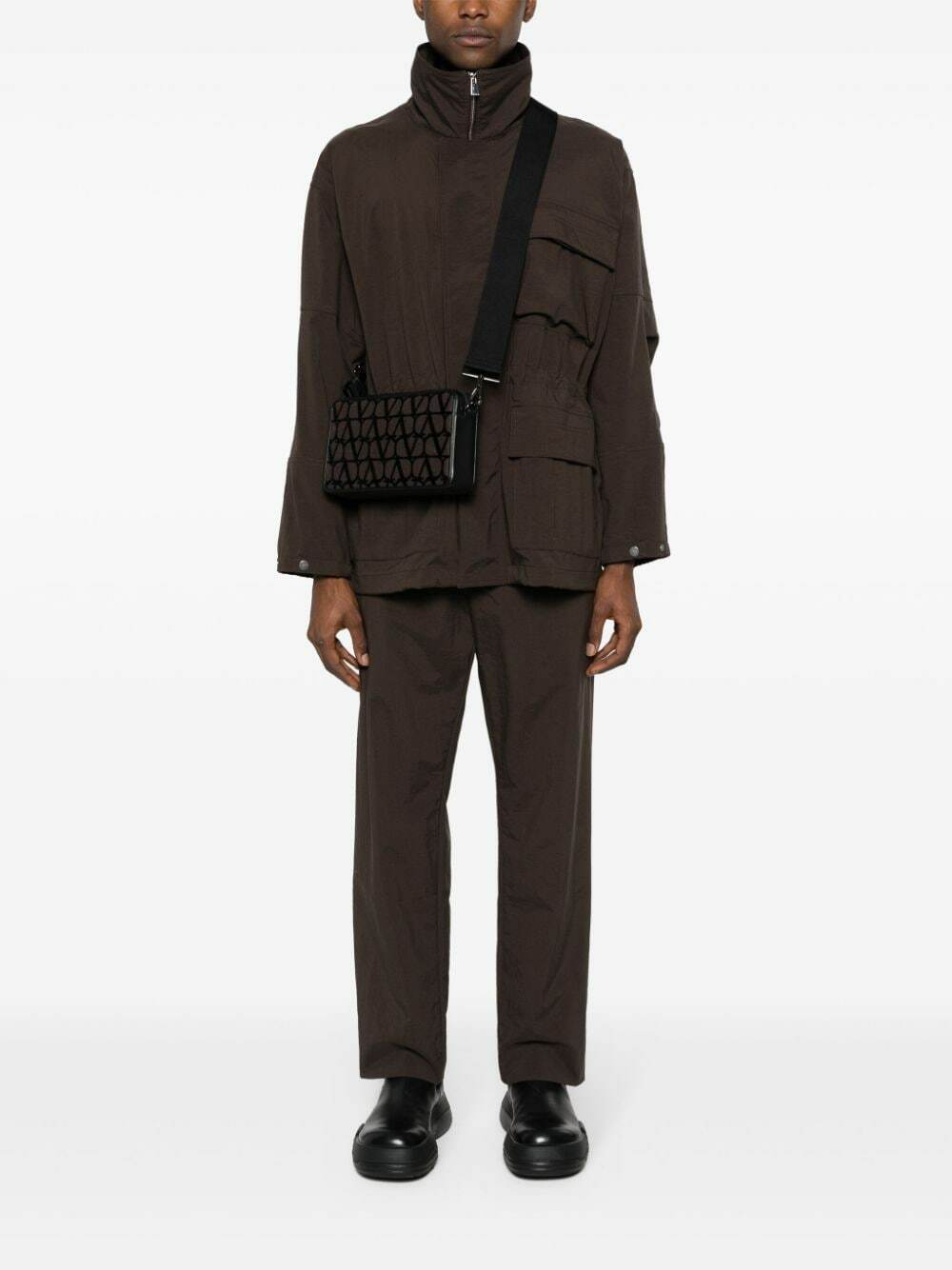
Iconic Valentino Bag Candystud Accents

October 25, 2026 by Jack Krudwig

Why Garavani Sits on Your Valentino Bag

Turn a Valentino bag inside out and the tag gives you two words where you might have expected one: VALENTINO and GARAVANI, in capitals, above MADE IN ITALY. Shoppers mostly treat that second word as a flourish, as a founder’s signature added for prestige, or as evidence they have bought some particular sub-line. It is none of those things. GARAVANI sits on the bag because a contract signed in 1979 requires it to be there, and that same requirement is why the word runs throughout the advertising for the house’s leather goods. Understanding the reason turns a piece of trivia into the single most useful check a buyer can make. What follows explains where the word comes from, what it guarantees and what it does not.

The short answer

Because another company holds overlapping rights to the word Valentino on handbags in the United States, the Roman couture house agreed decades ago to add its founder’s surname and stay distinguishable. That other company is Mario Valentino S.p.A., founded in Naples in 1952, a leather goods and footwear business with no connection to the couture house founded in Rome in 1960. The American trademark Valentino for handbags and leather goods has been held by Mario Valentino since 26 April 1971 on the company’s account, with that senior-rights position corroborated in legal reporting. In 1979 a coexistence agreement divided the marks between the two businesses; among its terms is one obliging Valentino S.p.A. to use GARAVANI alongside VALENTINO on leather goods and in the advertising for them. So the word on your bag is a legal obligation carried out in stamped capitals. Everything else here is detail hanging from that one fact.

The man who gave the surname

Valentino Garavani founded the house in Rome in 1960 together with Giancarlo Giammetti, opening the first atelier on Via Condotti. Close to five decades of designing under his own name ended with his retirement from design in 2007 and a final couture collection in January 2008. Having sold the valentino bags company in 1998, he no longer owned the business carrying his name by the time he stepped back. He died on 19 January 2026, aged 93. None of the bags in the current collection were designed by him, and nor was anything made in the past two decades. The surname on the tag records who started the house; it says nothing about who works there now.

The 1979 agreement, and the case that tested it

The two companies settled their overlap privately rather than through a court, and the coexistence agreement they signed in 1979 is still the governing document. Both directions are covered: each business gets a defined set of permissions and a defined set of limits. An American court tested the arrangement decades later, after Valentino S.p.A. filed suit against Mario Valentino in July 2019 in the Central District of California, docketed 2:19-cv-6306, alleging false advertising, unfair competition and breach of the coexistence agreement. Mario Valentino’s counterclaims were dismissed in April 2021, and the case was settled and dismissed without prejudice on 14 June 2024, with terms that were never disclosed. Because it ended without prejudice either side may bring the matter back, and reporting indicates further proceedings, including arbitrations, remained live in Italy. No wrongdoing was established against either company and none is suggested here; this is a trademark boundary between two legitimate businesses.

What the Naples company can do

Several forms of the name are open to Mario Valentino under the agreement. The exterior of its products may carry Mario Valentino, M. Valentino, Valentino, MV or V. One condition applies, namely that the full name Mario Valentino must appear inside the item and on its packaging, which keeps the maker identifiable to anyone who opens the bag. What it may not do is combine V and Valentino together on leather goods. These are genuine goods from a genuine Italian house, sold at a different price point and through different channels than the couture house uses. Claims the company makes about inventing the stiletto heel and the women’s moccasin are self-description rather than independently verified history, and are best treated that way.

What the Roman house has to do

The obligation running the other way is narrower and far more visible. On leather goods, and in advertising for leather goods, Valentino S.p.A. presents the mark as VALENTINO GARAVANI instead of VALENTINO alone. It is the reason the accessories line is named as it is, the reason the interior tag carries both words, and the reason the house’s own product pages for bags use the longer form consistently. The requirement does not reach every category identically, and that is why ready-to-wear can be presented as Valentino or Maison Valentino. In practical terms for a buyer, the effect is simple: the longer name on a bag is the expected, compliant form, and its absence on something sold as couture-house merchandise deserves a second look. The rule is boring, contractual and enormously useful.

Two names, one house

A common misreading has Valentino Garavani as a sub-brand, a diffusion line or a lower tier within the same company. That is wrong. Valentino Garavani is the naming convention for accessories, Valentino and Maison Valentino the ones for ready-to-wear, and all of it comes from one company applying one set of standards. Both a Rockstud crossbody bag and a couture gown are the work of the same house, with only the label wording differing, for the contractual reason set out above. Pierpaolo Piccioli has handed creative direction to Alessandro Michele, who has led the house since 2024 on the most recent confirmable reporting. On the ownership side, Mayhoola for Investments holds seventy per cent and Kering thirty per cent, the Kering stake acquired in July 2023 with a stated intention to take full ownership by 2028. In 2026 the accessories carrying the longer name were observed at market prices from about $650 for a VLogo Signature clutch up to $7,900 for an embroidered Panthea, all made in Italy, and average resale retention for the house sits near 41 per cent on Rebag’s data, with hero styles between 50 and 58 per cent.

What the word does and does not guarantee

GARAVANI on a tag tells you which company made the bag. It is not by itself proof of authenticity, as counterfeiters copy tags just as readily as they copy studs. Physical checks are the ones that matter: capitals in a consistent font weight, evenly pressed stamping without smudging, a tag sewn down on all four sides, engraved rather than printed hardware logos, square zip pulls with rounded edges and deep engraving, uniform pyramid studs at even spacing, and stitching of consistent density. On most bags a serial number sits on a tag inside an interior pocket, often black, cream or light brown, but not on all of them, older pieces frequently lack one, and a missing serial proves nothing by itself. There is no date-code system on these bags at all, and any guide claiming to decode a production date from the digits is inventing it. The authenticity card is reported to carry the model specification, the serial and Made in Italy, with the serial matching the interior tag, though the description comes from resale and authentication practice rather than an official brand statement, and pre-owned bags frequently arrive without one.

What is in front of you What it really means
Both VALENTINO and GARAVANI on the interior tag Made by the Roman couture house, as its 1979 obligation requires
Valentino outside, Mario Valentino inside or on the packaging A genuine bag from the separate Naples company
The interior tag carries no serial number Seen on older pieces, and not proof of a fake on its own
Anything presented as a date code That system does not exist for these bags
A pre-owned bag with no authenticity card Common enough, since cards are often lost or never passed on

Reading the listing before you buy

Mistakes usually live in the description rather than in the bag. Headed simply Valentino bag, a resale listing carries no information about which company made it, and sellers abbreviate constantly, sometimes without realising there is anything to abbreviate. Ask for a clear photograph of the interior tag before agreeing a price, and believe what the tag says rather than what the title says. Shopping new, buy from the house’s own boutiques and webstore or from named authorised retailers such as Neiman Marcus, Bergdorf Goodman, Saks Fifth Avenue, Nordstrom, Mytheresa, Farfetch, Selfridges or Harrods, where the question never comes up. Browsing a Valentino bag sale at an American off-price chain, expect Valentino by Mario Valentino, because that is what those chains’ own brand filters list. All of it is settled by one word on a tag, and that is precisely why it is worth knowing how the word got there.

Filed Under: Featured

Investment Handbags Explained The Row Margaux Bag

October 25, 2026 by Jack Krudwig

The Margaux Tote: Where to Find The Row’s Beloved Icon

Very few pieces in today’s style world hold such understated prestige that a Margaux does. Since its introduction, this tote from The Row has become shorthand for a certain kind of understated wealth — the kind that needs no branding to be identified. Editors, stylists, and off-duty models have turned it into something close to a uniform, and that ubiquity has simply made the matter of finding one more urgent. Different from houses that oversupply stores each season, The Row works within deliberate limits, which means finding a genuine Margaux requires knowing exactly where the brand actually sells.

Covered here are the legitimate channels for buying the bag, as well as what distinguishes the Margaux within the line, and its standing against other notable options in the range. This also includes a practical look at pricing patterns, resale behavior, and what buyers ought to be wary of when a “row sale” looks too generous to be true.

What Makes the Margaux Different

The Margaux is part of a design ethos that carries across virtually the entire row handbag range: pared-back metal fittings, shape maintained through the leather itself rather than decoration, and a silhouette that ages well instead of dating quickly. The bag is available across several sizes, generally identified with a number, allowing it to function as both a daily carry and a larger work tote. Materials are chosen and finished to a standard that gives the bag its characteristic slouch-then-hold shape — supple enough to feel worn-in, structured enough to keep its form.

The key difference between the Margaux and other tote styles from row top handle the row is its lack of closure at the top and the way the handles are set, creating that recognizable rounded silhouette when carried by hand or tucked under the arm. The bag doesn’t announce its craftsmanship via visible seams or branding; its quality emerges gradually with use. That subtlety is precisely why it has earned devoted followers among those who’d rather their bag signal knowledge than cost.

Authorized Places to Buy

The Row sells directly through its own website and a limited set of physical flagship stores in cities including New York, Los Angeles, London, and Paris. Going straight to the brand assures authenticity and access to the full range of sizes and leather options offered that season, though inventory for in-demand sizes sells out fast and replenishment isn’t promised on any set timetable.

A handful of high-end multi-brand retailers, among them Net-a-Porter, Mytheresa, and Bergdorf Goodman, stock The Row’s ready-to-wear and accessories, beyond the brand’s own outlets. These stockists are approved partners, which means any Margaux purchased through them arrives with complete assurances of authenticity plus normal return terms. It’s worth checking these sites regularly as stock levels may vary from what The Row itself carries, now and then turning up a size or colorway not offered through The Row’s own channels.

  • The Row’s own site and its flagship stores
  • Net-a-Porter
  • Mytheresa
  • Bergdorf Goodman

Purchasing from anywhere beyond this brief list calls for genuine care. The resale market for the row bags is sizable, and its appeal has made it prone to convincing knockoffs, most notably for the Margaux because of its high profile.

How to Safely Source The Row Margaux Bag on the Resale Market

If you’re researching how to buy The Row Margaux bag secondhand, well-regarded consignment platforms with their own authentication staff are the more secure choice. Sellers on open marketplaces self-report condition and authenticity, whereas sites that physically check hardware, stitching, leather grain, and interior tagging before listing offer much stronger safeguards. Favor platforms showing thorough photos of the interior stamp, zipper pulls, and base, as these details are frequent weak points in counterfeit pieces.

The Margaux’s resale value generally stays strong compared with many other luxury totes, a reflection of consistent demand rather than inflated hype. The highest resale prices go to bags in excellent shape that still have their original dust bags and receipts, occasionally nearing original retail cost depending on size and leather type. That staying power is a key reason the Margaux is regularly named, in any thorough row bags overview, as one of the smarter long-term investments in the current handbag market.

Making Sense of a Row Sale

Discounts from The Row are neither deep nor common, which helps sustain strong resale values. When a row sale does happen — typically limited to select past-season pieces at authorized retailers like Net-a-Porter or Mytheresa — current-season Margaux bags in in-demand sizes and leathers are seldom part of it. Anyone hoping to snag a discount should look to sale events at multi-brand retailers as the surest bet, since The Row’s own site rarely runs promotions on core accessories.

Approach with skepticism any third-party site promoting sharp price cuts on the Margaux. Because the bag is so recognizable, counterfeiters often use it as bait, copying the look of genuine sale pages. When an authentic discount on a Margaux does exist, it’s typically minor — somewhere between 20 and 30 percent — and tied to a specific past-season colorway rather than the bag’s core offering.

The Margaux Compared to Other Top Row Bags

Well beyond the Margaux, The Row’s bag range carries on, and recognizing its position in that broader range helps clarify why it emerged as the hero piece. Below, a table lines up the Margaux against two other frequently discussed pieces among the leading row-bag lineup: the Sofia along with the Musee.

Style Silhouette Ideal Use Key Trait
Margaux Tote with an open top Regular wear, commuting, journeys Slouch structure with rounded handles
Sofia Firm-framed top-handle bag Black-tie or after-dark events A stiff structure featuring crisp, angular lines
Musee Soft hobo Casual, relaxed wear Minimal hardware, unlined interior option

Each piece occupies a distinct place within the row-bag lineup, but the Margaux remains the most versatile of the three, largely because its size range works for both pared-back everyday needs and bigger-capacity demands. That adaptability, alongside its understated design sensibility, which has turned it into the entry point for so many new to the row aesthetic.

How It Styles Day to Day

Part of the Margaux’s appeal lies in how effortlessly it fits within varied wardrobes. It reads equally well against tailored trousers and a blazer as it does with jeans and a plain knit top, which explains its popularity by such a broad range of the row’s audience — from creative professionals to those simply drawn to quiet luxury. With wear, the leather takes on a natural patina, and many owners report that the bag actually looks nicer, not more worn, after roughly a year of regular wear.

Given that The Row avoids trend-driven cycles, the Margaux has avoided the kind of design fatigue that impacts more branding-heavy designs. It photographs well with no need for forced styling touches, which has made it a mainstay among stylists building quietly polished, editorial-style looks. Such durability in style is a significant point for shoppers weighing cost-per-wear against trend-driven alternatives.

Final Considerations Before You Buy

Those genuinely intent on getting a Margaux should begin by checking the authorized sellers noted above, keeping an eye on inventory since restocks can happen without much notice. If resale is the only viable route, prioritize marketplaces known for strict verification over sites that barely check sellers. Checking prices among several trustworthy sources first is a reasonable step, particularly given just how much wear-and-tear impacts worth on a bag built to age visibly.

Where the Margaux stands within the row handbag lineup is no coincidence — it reflects a design that balances practicality, craftsmanship, and restraint in a way that has proven durable both in style and in value. Whether bought new from The Row’s own channels or sourced carefully through resale, it remains one of the steadier bets in modern luxury accessory design heading into 2026.

Filed Under: Featured

Official Staple Denim Tears Fan Favorite Piece

October 25, 2026 by Jack Krudwig

Denim Tears vs the Wider Streetwear Field: Where the Difference Sits

Put ten streetwear hoodies on the same rail and the majority are judged on the same three levers: the logo, the fit and the drop calendar. Denim Tears builds on a fourth axis altogether, and copying it is much harder, and that explains the existence of the graphic. What follows lines up the label and the wider streetwear field on positioning and design philosophy, rather than on quality, since quality is broadly comparable among serious brands at this price. No named competitor is attacked here, and no revenue, market-share or sales figures have been invented along the way. Behaviour is the subject: what goes onto the garment, how often product arrives, how collaborations get chosen and how a piece ages. Treat it as a map of where denim tears sits instead of a scoreboard.

Axis One — The Idea Printed on the Garment

Streetwear leans hardest on the wordmark: a name in a distinctive typeface, repeated until it becomes shorthand for a subculture. The system works well, which explains why so many successful labels depend on it, and decades of legitimate history stand behind it. Denim Tears goes the other way, leading with a pictorial motif that points well beyond the brand itself. What the cotton wreath addresses — cotton cultivation, the transatlantic slave trade and African-American experience — reaches back four centuries before the company existed. Because the meaning is not self-referential, the graphic cannot be diluted by the brand’s own success in the way an overexposed wordmark is. Structurally, this is the largest difference between the label and the field around it, and the rest of the differences denim tears flow out of it.

Why That Distinction Matters in Practice

Any label led by its logo is obliged to keep that logo interesting, so you get seasonal variations, colour experiments and typographic redesigns. A motif-led brand has the opposite problem, and the opposite advantage: the image has to remain recognisably itself, which turns consistency into a strength instead of a limit. The wreath has stayed essentially fixed since 2019, with placement, colourway and substrate varying instead of the drawing itself. The effect is that an early release and a piece from 2026 read as parts of the same continuous body of work. Collectors notice, because a coherent archive is worth more than a pile of unrelated seasons. It also makes the brand unusually resistant to the boredom cycle which retires most graphic-led labels inside five or six years.

Axis Two — Release Rhythm and Scarcity

The drop model runs most of streetwear: limited quantities released on a published schedule to concentrate demand. The mechanism is the same at Denim Tears, only much less frequently, with weekly cadence given far less emphasis. Fewer, larger releases produce a different relationship with the audience, because anticipation accumulates across months rather than days. The trade-off is real: less shelf presence, fewer chances to correct a weak product and heavier dependence on each release landing well. Brands that drop weekly iterate quickly and bounce back from a miss almost at once, which is a real advantage of that model. Neither approach is superior in the abstract, and the right fit comes down to whether a buyer enjoys hunting or would rather things were simply in stock.

Axis Three — The Logic Behind the Collaborations

The usual logic of collaboration is audience logic: two brands are paired because their customer bases overlap enough to guarantee sell-through. Denim Tears has tended to pick partners whose own history reinforces the argument the wreath makes, a narrower and more demanding filter. The 501 ended up the definitive canvas because Levi’s brought a garment carrying more than a century of American working history. Converse added a silhouette of similarly long cultural standing, testing the motif outside apparel altogether. Streetwear’s founding generation came into the picture through Stüssy, and collaborative work within Dior’s menswear moved the wreath into a European luxury context. Tremaine Emory’s spell as creative director of Supreme between 2022 and 2023 belongs alongside that record and repeats the same pattern of working at the centre of institutions rather than their edges.

What a Buyer Should Draw From That Pattern

A collaboration record is one of the few brand signals that cannot be manufactured cheaply, since each partner has to say yes first. Reading that record is therefore a fair way to test whether a label is arguing something or simply renting attention. The points below turn the pattern described above into decisions you can act on with money. These are not rules, and if you want a piece for your own reasons you owe nobody an explanation. They are best read as the questions an experienced collector works through before bidding on a co-branded item. Take them in order, since the first two resolve most cases on their own.

  • When a brand filters partners consistently, you are usually looking at a real thesis rather than a licensing department, which makes partner choice one of the more reliable signals of intent.
  • Keep the collaboration budget separate from the mainline one, since a premium over mainline pricing is all but guaranteed.
  • A collaboration built on a genuinely iconic host garment tends to hold value longer than one built purely on two logos meeting.
  • Because collaborative runs are usually tighter, resale spreads widen and authentication matters more.
  • The mainline denim tears jeans and hoodies say the brand’s idea more directly than the collaborations do.
  • Most disappointment with a collaboration traces back to one thing: it was bought for the partner’s name rather than the concept.

Axis Four — Where the Price Bands Sit in 2026

On price the label sits above mass streetwear and beneath European luxury, a crowded and competitive band. As 2026 market estimates and not fixed quotes, a denim tears hoodie typically sits between $250 and $400, and jeans between $300 and $500. Expect a denim tear shirt between $100 and $200, denim tear pants around $250 to $350, and shorts roughly $180 to $280. Price on its own separates nothing here, because those figures sit level with other established graphic-led labels of similar scale. The divergence shows up in how those figures behave afterwards, since limited production and a stable motif hold secondary values better than seasonal graphics do. Anyone weighing the outlay should read resale as a possibility rather than a promise, because no garment market is guaranteed.

Positioning Axis The Denim Tears Approach Standard Streetwear Method
Primary visual device Fixed pictorial motif carrying an external historical reference Self-referential wordmark or seasonal graphic
Design development One motif, with placement and substrate doing the work New artwork each season, motif rarely permanent
Pace of releases Fewer releases, each carrying more High-frequency drops, weekly or biweekly in many cases
The collaboration filter The history a partner carries decides it Choice driven by audience overlap and reach
2026 estimated price band Broadly $100–$500, category depending Everything from budget tiers to luxury levels
How the archive ages Age does little to older pieces, which remain collectible Swings widely with how dated the artwork looks

Axis Five — Where Positioning Analysis Stops

A positioning analysis has its limits, and naming them beats pretending the case is closed. Fit preference is personal, and a boxy oversized cut that flatters one person will swamp another regardless of what the graphic means. Construction quality across serious labels in this band is comparable, since most use comparable manufacturing partners and specifications. Availability is a real weakness of the lower-frequency model, so a buyer needing a good denim hoodie in their size next week might do better elsewhere. Some will also find the brand’s directness uncomfortable, a legitimate response to work that is deliberately not decorative. None of that changes the structural point, though every part of it counts at the moment of deciding.

Six Lines That Carry the Argument

Stripped of the argument that produced them, everything above comes down to a handful of claims. None of the lines below is a recommendation to buy, since that comes down to budget, climate and your appetite for chasing a release. They are the structural facts that separate this label from the field it competes in, nothing more. If you disagree with one of them, that reaction reveals more about your priorities than about the label. Read them as a summary, not a judgement. The verdict is yours, and it ought to rest on the garment in front of you.

  1. What differentiates the label is a motif aimed at history rather than at itself.
  2. The catalogue behaves like an archive, not a sequence of seasons, and consistency since 2019 is why.
  3. Lower release frequency trades convenience for concentration, and that serves collectors better than casual buyers.
  4. Collaborations run through a historical filter, and that is why the Levi’s pairing is still the definitive one.
  5. Because prices fall inside a competitive band, the argument has to rest on the idea rather than the number.
  6. Whoever searches denimtears in 2026 is buying into a particular argument, and grasping it honestly is part of wearing the piece well.

Filed Under: Featured

  • « Previous Page
  • 1
  • …
  • 23
  • 24
  • 25
  • 26
  • 27
  • …
  • 923
  • Next Page »

Register or Sign In

watch, like, follow.

 watch  like us  tweet us

San Antonio real estate information provided by Becker Properties, LLC. We don't assume any liability or responsibility for the operation or content of linked resources, nor for any interpretations, comments, graphics, or opinions contained therein. All information deemed reliable, but not verified or guaranteed. Becker Properties is a licensed real estate brokerage in the State of Texas and supporter of Fair Housing law.


© 2009-2026 · Becker Properties, LLC · 210.920.2727 · 4462 Lockhill Selma Rd Suite 101, Shavano Park, TX 78249 · Privacy· Seller Compensation Offers for Cooperating Brokers · Texas Real Estate Commission Consumer Protection Notice · Texas Real Estate Commission Information About Brokerage Services · Tenant Login